Keep instructions simple
One clear cue is easier to learn than a stream of repeated words.
Good training gives your dog understandable direction and gives you a plan you can confidently use in ordinary life.
Dogs learn from patterns. They notice what earns access, attention, movement, play, food, and freedom. When expectations change from person to person or from day to day, unwanted behavior often becomes more persistent because the dog cannot predict what will work.
Our job is to make expectations easier to understand. We teach a cue, show the dog how to succeed, reward useful choices, and gradually add realistic distractions. Owners learn where to stand, when to give a cue, how to reward, and what to do when the dog is not ready for the next step.
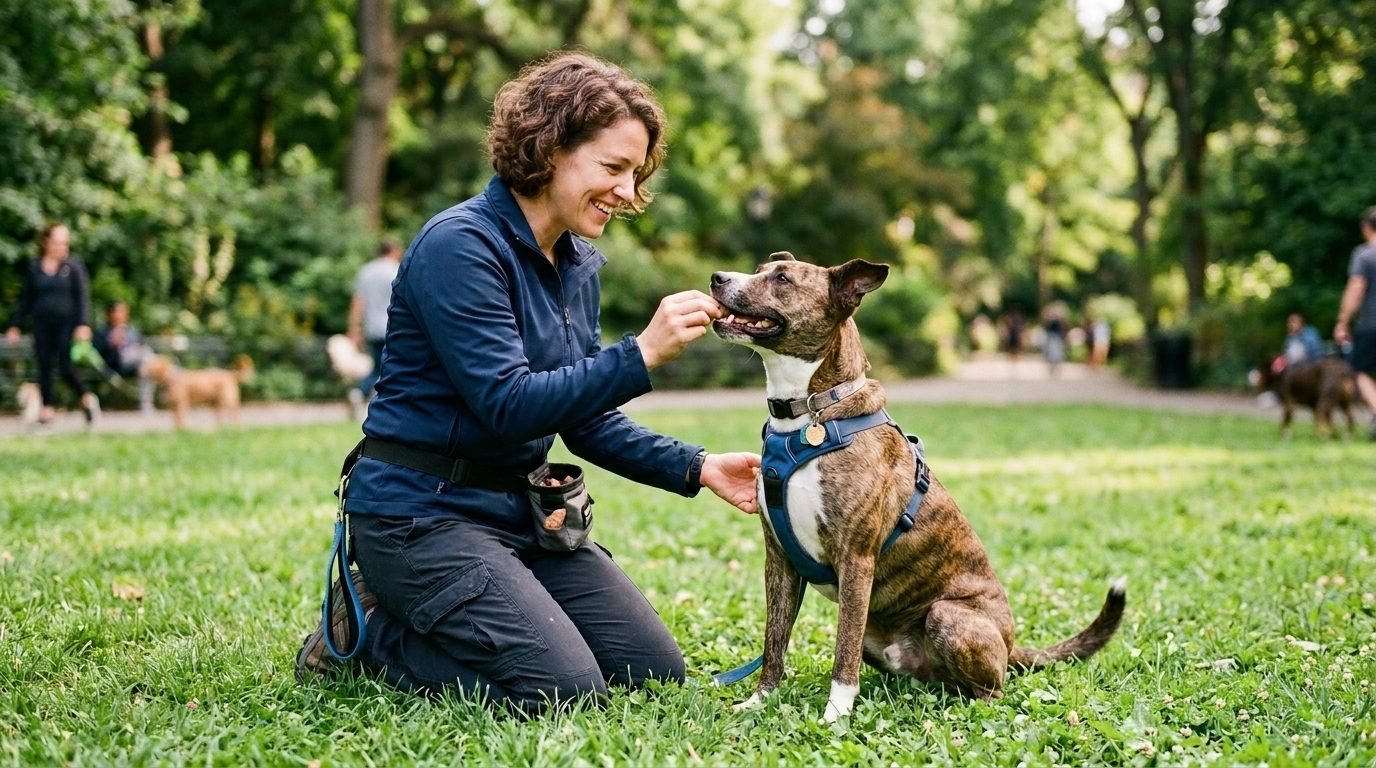
One clear cue is easier to learn than a stream of repeated words.
Timing matters. Useful behavior should lead to outcomes the dog values.
Learning is stronger when difficulty increases gradually instead of all at once.
Gates, leashes, distance, routines, and preparation prevent unwanted habits from being rehearsed.
Progress lasts when the people in the home know how to respond consistently.
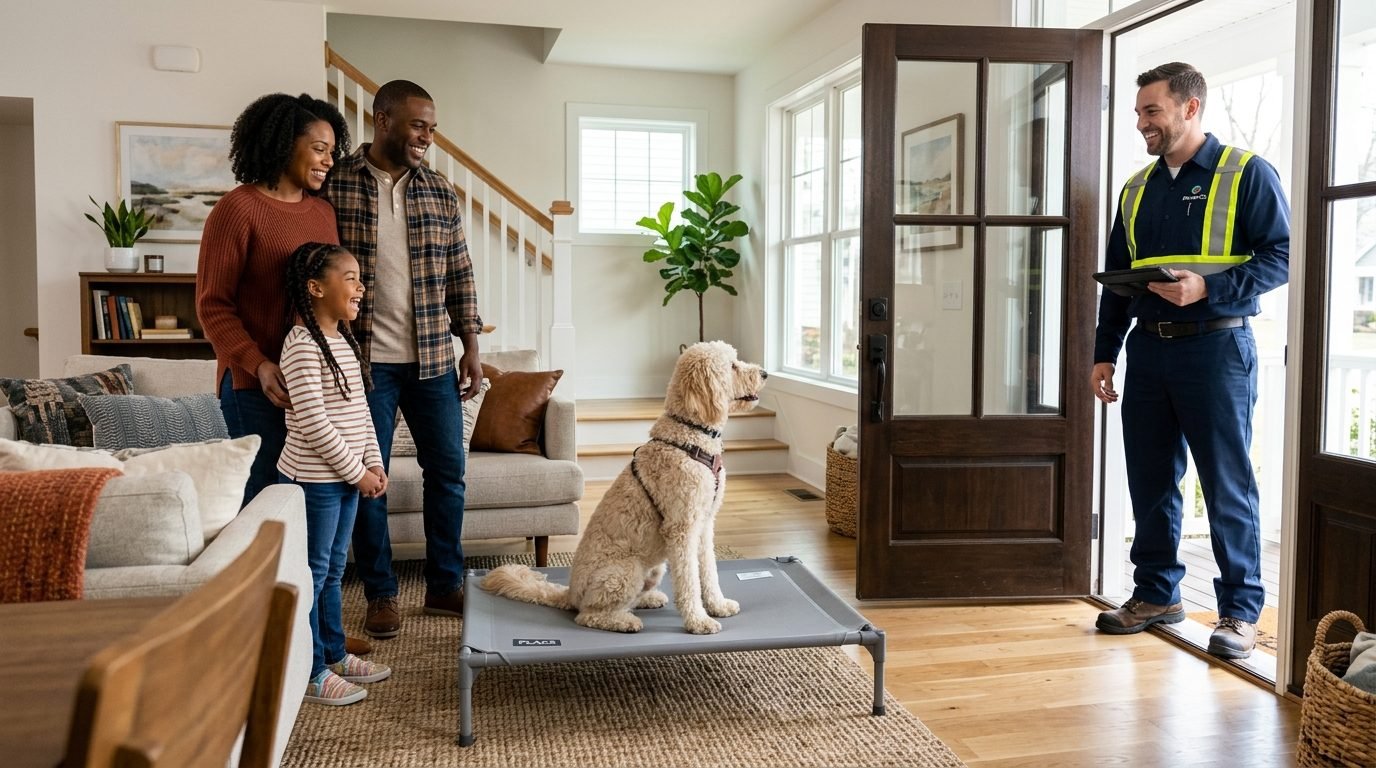
A sit in a quiet room is a starting point, not the finish line. We help owners carry skills into doorways, neighborhood walks, family meals, visitor arrivals, car rides, and other situations that matter.
That does not mean throwing a dog into overwhelming settings. Reliability is built by changing one variable at a time: duration, distance, distraction, or location. This protects confidence and gives the owner a fair way to judge when the dog is ready for more.
Training remains practical and safety-aware. Dogs with serious fear, aggression, or bite histories may need additional evaluation and carefully managed goals. We discuss those concerns honestly before setting expectations.
View Training ProgramsCall, text, or email with your dog’s age, main challenges, and your location.