Leash Training in Dunwoody, GA
Get practical help with pulling, distracted walking, check-ins, pace, and safer handling around neighborhood distractions.
Quick check: is this what you are dealing with?
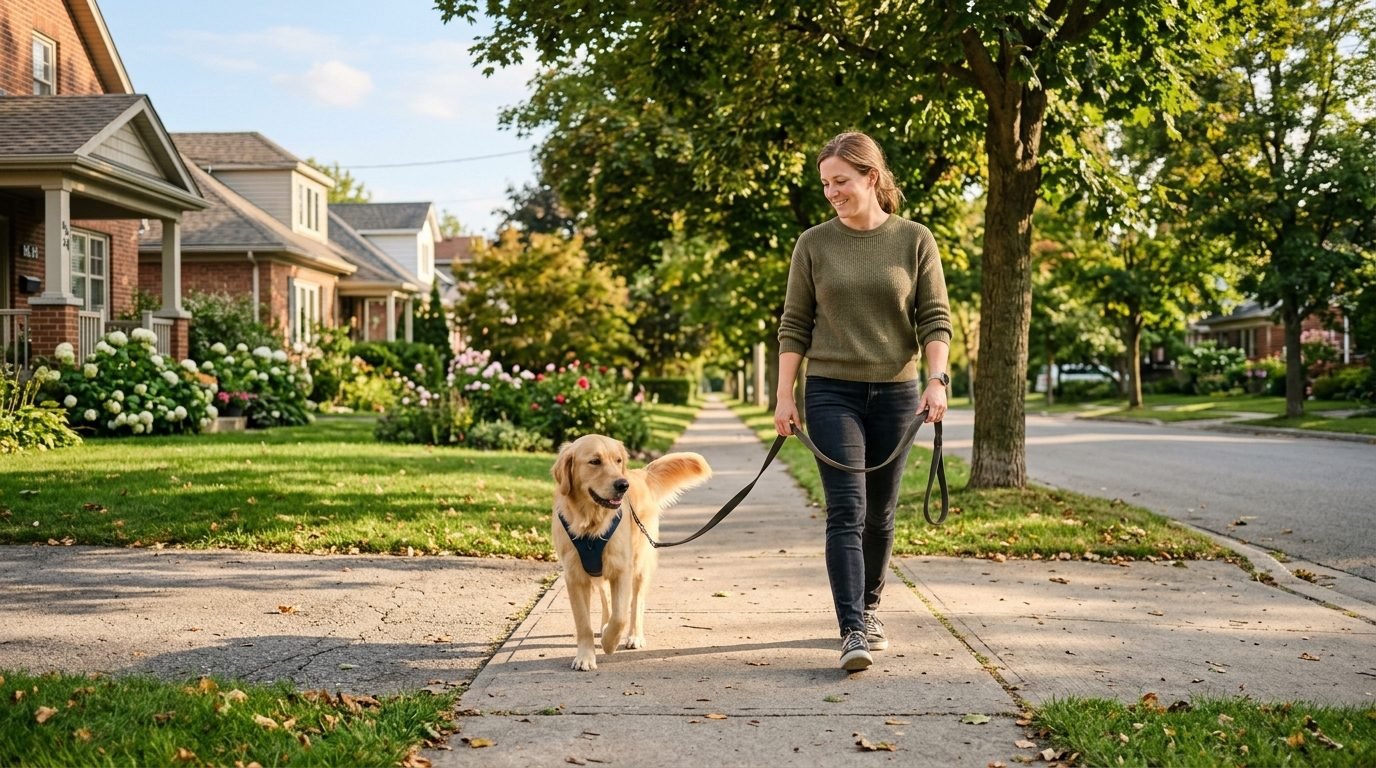
Turn the walk into a shared activity
Leash pulling is frustrating because the dog and owner are moving with different priorities. The dog follows smells, movement, people, and other dogs while the owner tries to maintain direction and safety. Repeated tension can become the normal pattern: the dog pulls, the person follows, and pulling continues to work.
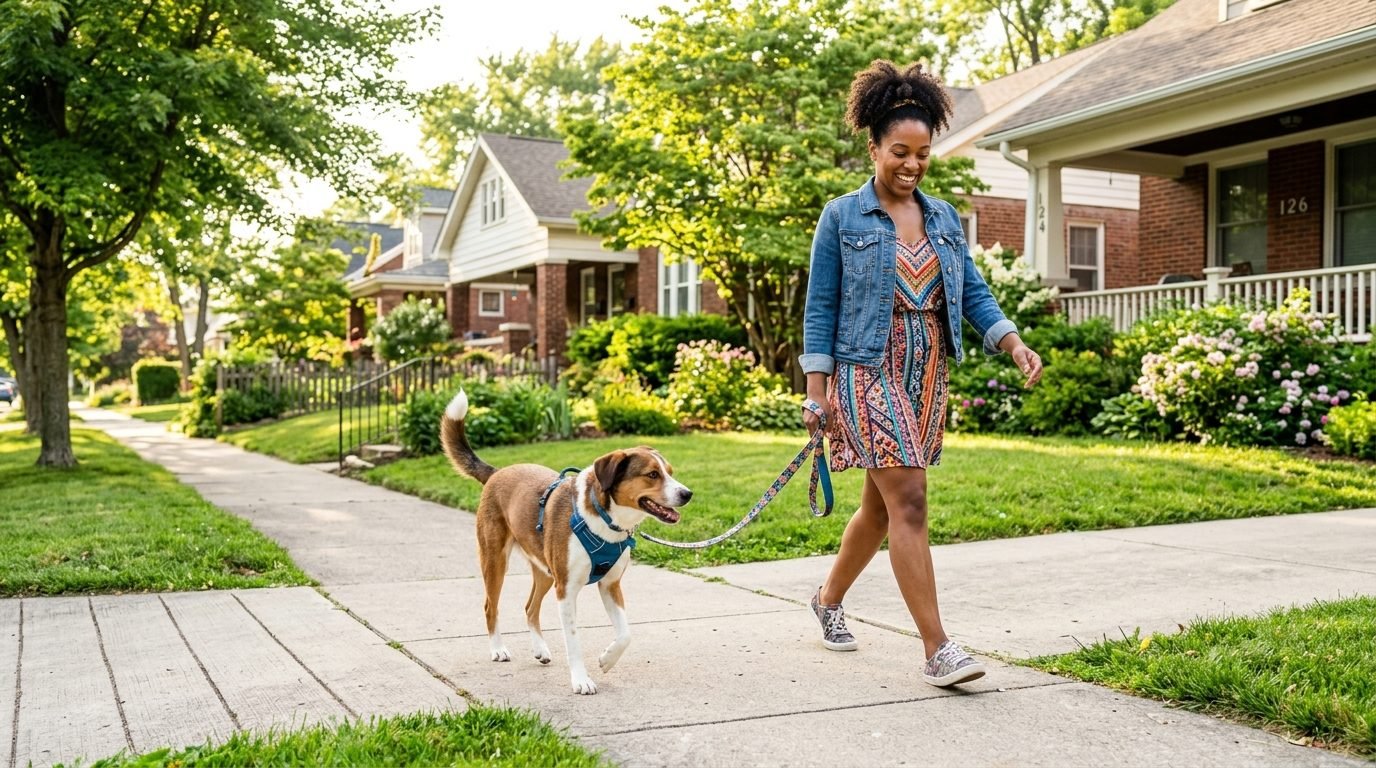
Leash training changes that pattern. We teach the dog to notice the handler, respond to changes in pace and direction, and understand where reinforcement happens. Owners learn how to hold the leash, reward position, prevent tangles, use distance, and avoid giving mixed signals.
The goal is not a competition-style heel for an entire walk. Most families want a dog that can move on a reasonably loose leash, pass common distractions, and reconnect when asked.
Why dogs pull
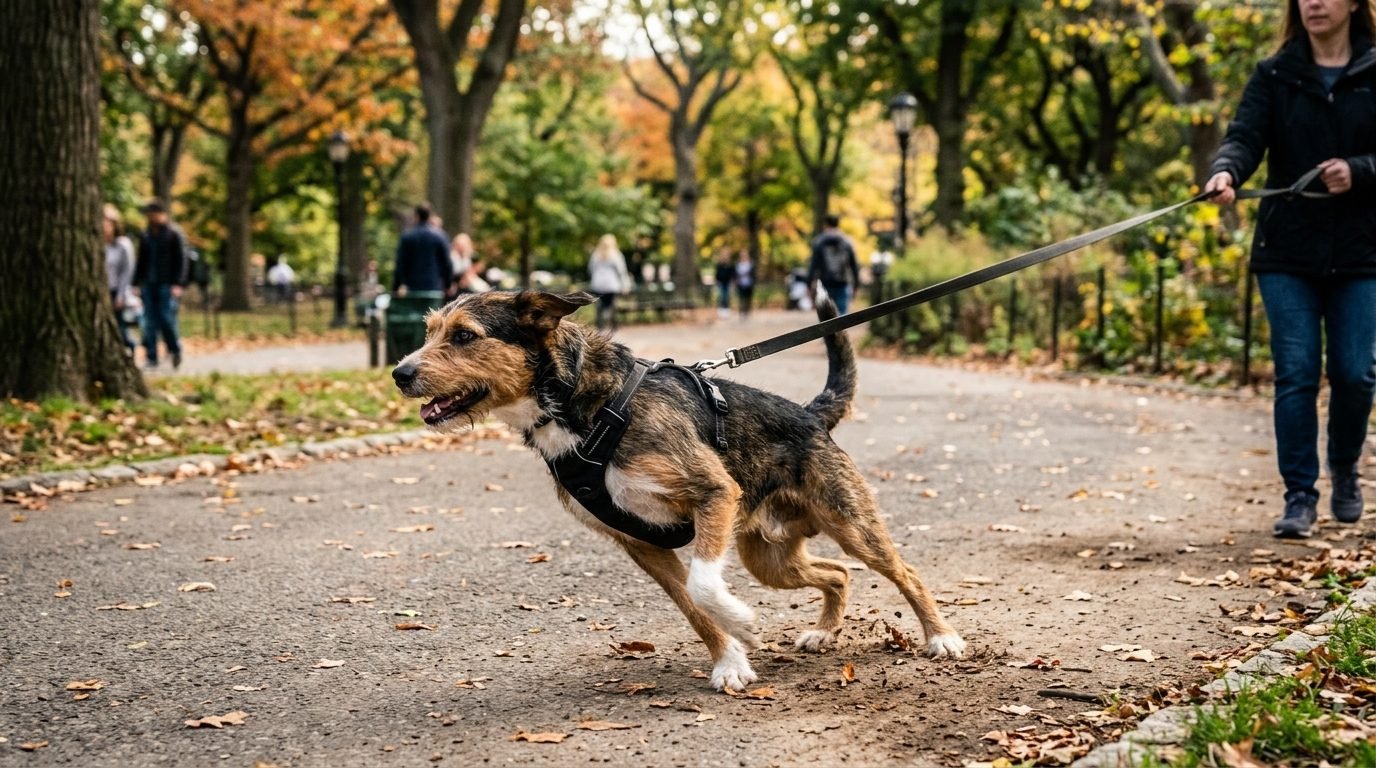
Pulling may come from excitement, reinforcement history, frustration, fear, lack of engagement, excess energy, or simply never being taught another way to move. Equipment can influence control, but equipment alone does not teach the dog what to do.
- The dog reaches interesting smells by pulling
- Walks begin in a highly excited state
- The owner follows constant forward pressure
- Distractions are introduced too close or too quickly
- The dog has not learned to check in
- Fear or reactivity changes the dog’s ability to think
How we build better walks
- Check safety and equipment. The leash, collar, or harness should fit securely and suit the dog.
- Create attention before movement. We reward orientation and calm starts.
- Teach leash pressure and position. The dog learns how to move with the handler instead of against the leash.
- Practice turns, stops, and pace changes. Predictable patterns make communication clearer.
- Add neighborhood distractions. Distance and difficulty are adjusted to keep the dog successful.
Pulling and reactivity are not always the same problem
A dog may pull because the environment is exciting, while another may lunge or bark because it is fearful, frustrated, or highly aroused around specific triggers. Reactive behavior requires more than asking for a heel. We consider trigger distance, recovery time, body language, and the dog’s ability to eat, think, and respond.
When safety concerns are present, the plan may include management, carefully chosen walking routes, greater distance, and customized behavior work. We do not promise that every dog should greet other dogs or walk through crowded areas. A successful plan is one that keeps the dog and owner safe while improving control and confidence.
What affects leash training cost?
Pricing depends on the dog’s size and strength, pulling history, reactivity, equipment needs, neighborhood difficulty, and the level of reliability requested. A dog learning basic loose-leash skills may fit a standard manners program. More complex behavior may require a customized recommendation.
Leash training for Dunwoody neighborhoods
We help owners prepare for sidewalks, passing dogs, runners, bicycles, driveways, green spaces, and other common Metro Atlanta walking distractions.
Leash Training in Dunwoody, GA FAQs
Can you stop my dog from pulling?
We teach the dog how to stay connected to the handler, respond to direction changes, and move without constant pressure on the leash.
What equipment do I need?
A standard leash and secure, properly fitted collar or harness are usually enough to begin. We can discuss equipment based on your dog.
Do you use retractable leashes for training?
A fixed-length leash generally gives clearer communication during lessons. We can explain the safest setup for your goals.
Can leash training help with barking at other dogs?
It can be part of the solution. We also evaluate distance, triggers, arousal, recovery, and the dog's ability to focus.
Will we practice in my neighborhood?
When appropriate, real neighborhood practice helps owners apply skills around the distractions they encounter every day.
How quickly will walks improve?
Many owners notice useful changes early, but durable progress depends on the dog's history, consistency, and the difficulty of the walking environment.
Can children walk the dog after training?
Safety comes first. We assess the dog's size, strength, behavior, and reliability before recommending who should handle the leash.
Do you serve areas outside Dunwoody?
Yes. We work with clients across Metro Atlanta; contact us to confirm your address and scheduling options.
Tell us what is happening with your dog
Share your dog’s age, main challenge, location, and what a better day would look like.